Commentary: A home in Seoul shouldn’t be this unaffordable
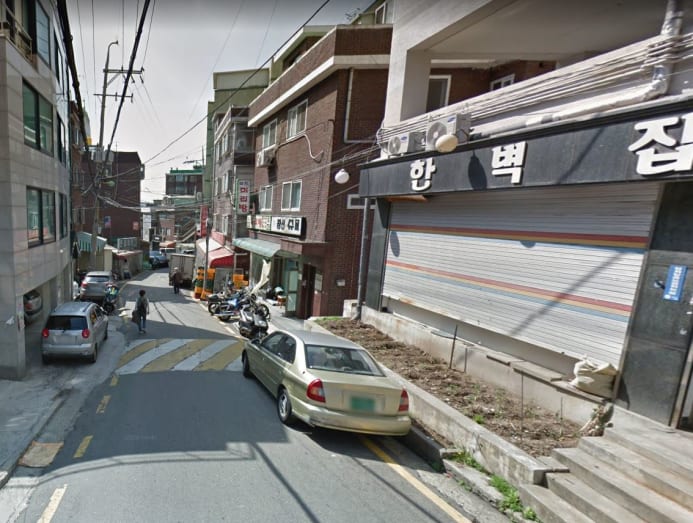
SEOUL: Seoul'due south Changsin neighborhood is a hybrid commercial-residential area that sits at the foot of a mount, under the watchful gaze of some original city walls.
For decades, Changsin has been one of the urban center'south least desirable neighbourhoods for residential living, peppered with depression-hire workshops and garment factories where workers sew cheap textiles to sell to the nearby market.
As Seoul gentrified in recent years, with most down-at-heel neighbourhoods bulldozed to make way for flat towers, glitzy malls and more, Changsin remained under the radar, with its retro backdrop attracting Instagrammers instead of developers.
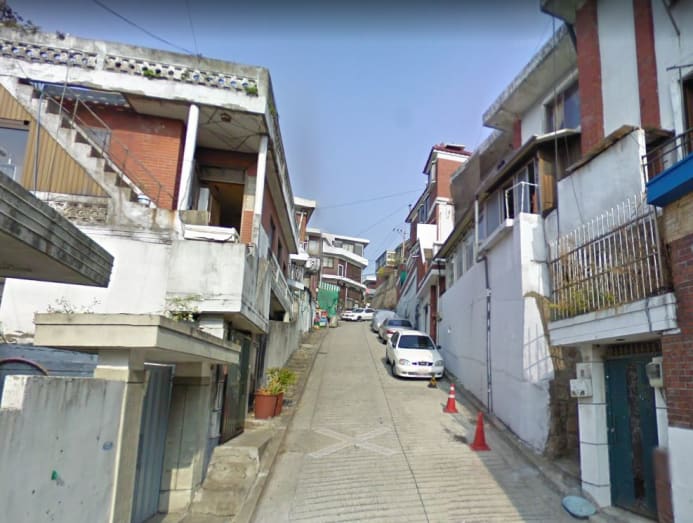
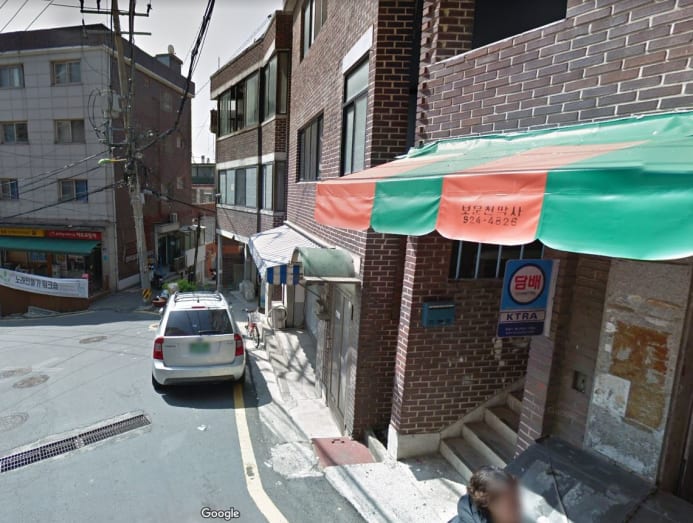
Small eateries and drinking spots loom nearby. Coupled with its narrow, crowded and winding streets and lack of admission to schools or large supermarkets, Changsin is especially unattractive to young families, who form a majority of domicile buyers.
Erstwhile dwellings continue to fall into disrepair, with aged, tightly packed walk-ups dotting the mural.
A FRONTIER IN THE Property State of war
Yet, even with all these factors working against it, Changsin has this year emerged as a frontier in the city's fierce battle for affordable housing, as officials begin looking for sites to host apartments fifty-fifty in the well-nigh unlikely neighborhoods.
City officials have picked Changsin and a few other underdeveloped areas to build new housing developments to ease the supply crunch and reply to the fervent demand for more homes in Seoul.
Only before these projects can movement alee, residents who already own property in those areas have to concord how to continue.
Such projects are complicated, equally many tenants who own their units may dig in their heels and try to negotiate a higher sale toll over the long term, while some wish to sell rapidly and others not at all.
The news has also led residents, local authorities and developers into a heated debate over how to change the area, and to what extent existing residents should be compensated with market place prices reflecting how much units in the new developments might cost.
In that location are also questions over how much financial and logistical back up should be given to residents wishing to continue staying in the neighbourhood or find alternative housing elsewhere.
Before turning to areas like Changsin, government even considered converting hotels, golf courses and military bases into residential developments and building homes on designated light-green infinite, an idea that proved so unpopular information technology was quickly abandoned. Residents have also opposed plans to build houses on public park space elsewhere in the city.
A Property CRAZE
The city'due south sought-after neighborhoods - shimmering Gangnam and Seocho in the s, leafy areas in the city'due south northwest - take seen prices airship in recent years, pricing out most middle-income households, so it's petty wonder Seoul government would look to less conventional places to build houses Due south Koreans can telephone call home.
Feverish competition for apartments in Seoul has nearly doubled prices and outstripped income growth many times over since president Moon Jae-in's 2022 inauguration, every bit a disquisitional mass of the population became convinced that owning real estate was the only path to a financially secure future.
Over lxxx per cent of Korean household wealth is in real estate and Korean club ascribes a cultural importance to owning a home equally a means to fiscal stability.
Another estimate suggests home prices skyrocketed past 26.7 per cent lonely since July 2020, according to ane of South korea'south largest bank KB Kookmin Bank.
This compared to the property price alphabetize ticking upwards merely by 25 per cent under onetime president Park Geun-hye's watch, according to civil society group Citizens' Coalition for Economical Justice, is shining an uncomfortable spotlight on the country's inequality.
Even before the coronavirus pandemic, inequality was already rise in South korea, every bit a two-tier economy divided the land into high-paying executives working for chaebol conglomerates similar Samsung and Hyundai, and workers slogging at minor- and medium-enterprises to make full roles more often than not to service these corporate giants.
The broken real estate market is a sign of a much deeper fissure in the economy, where a paucity of skillful jobs intersects with a weak social safety internet.
Not being able to afford a home becomes a vicious circle for middle-income families who have to spend longer renting, which eats into monthly budgets and pulls them farther from the goal of financial security.
Has COVID-19 inverse the Singapore property market for adept? Property experts discuss on CNA's Eye of the Affair:
CAN MOON SHIFT GEARS FAST ENOUGH?
In tackling the wider underlying challenges behind housing affordability, the South Korea government is rolling out a huge fiscal stimulus package to expand welfare benefits and drive the creation of jobs.
Its proposed budget in 2022 could see the debt ceiling burst the debt-to-Gross domestic product ratio of 40 per cent.
Simply information technology remains to be seen if these changes can come fast plenty for South Korean voters who will get to polls to choice a new president in March adjacent yr.
Housing affordability is set to be among the main issues in the election, aslope concerns about jobs and whether incomes are keeping up with rising costs of living.
The well-nigh-universal public perception is that the Moon administration'southward housing policies have backfired (and fifty-fifty Moon himself admits they haven't worked as intended), despite the imposition of over twenty measures to cool the property market.
Central amongst these poor policies include the tightening of mortgage restrictions and taxes on speculative purchases, which ended up fuelling college prices by spurring a rush of buying, egged on past low involvement rates.
Critics say Moon should have focused from the outset on increasing supply in places like Changsin. Moon'southward assistants knows this, and has announced South Korea will build an additional 830,000 housing units across the state, 320,000 of which are planned in Seoul.
The overheated housing market will exist the conservative opposition'southward go-to topic in disarming voters that a change of leadership is needed.
Early polls don't indicate a decisive culling leader from the opposition parties, but whoever takes the helm next year will be tasked with cooling the housing market, ramping up supply and creating practiced jobs that pay enough to allow people to beget them.
It'due south a daunting ready of tasks. Even if Moon's opponents win function, they may soon discover that it's far easier to criticise than to discover existent solutions.
Steven Borowiec is a journalist based in Seoul.
pottersuicklentrot.blogspot.com
Source: https://cnalifestyle.channelnewsasia.com/commentary/south-korea-housing-property-shortage-residential-homes-282751
0 Response to "Commentary: A home in Seoul shouldn’t be this unaffordable"
Enregistrer un commentaire