Is the Boston Museum of Fine Arts in the Back Bay Section of Boston?
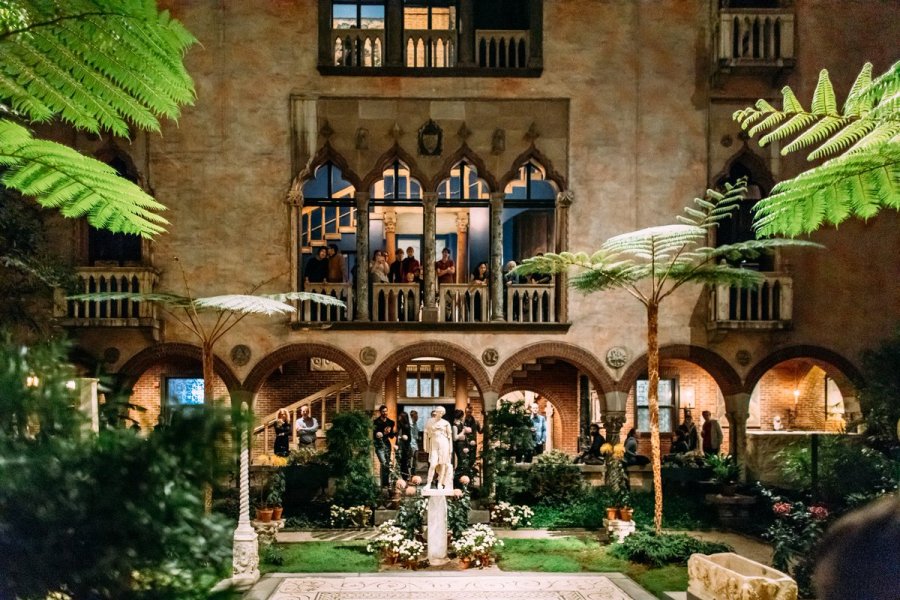
The biggest art theft in history occurred at the Isabella Gardner Stewart Museum, in Boston, Massachusetts. On March 18, 1990, two burglars broke into the museum and fabricated off with 13 works of art, worth half a billion dollars. Despite a thorough investigation and several promising leads, the Gardner theft remains unsolved to this twenty-four hours. While the details of the theft take been widely publicized, many folks don't know much about the history of the museum and the incredible adult female who started it all.
Gardner established the popular art museum in Boston to hold her massive and valuable art collection. The museum is habitation to over 7,500 pieces of art, including paintings, furniture, silvery, sculptures, textiles, ceramics and ane,500 rare books. The majority of the masterpieces came from ancient Rome, Medieval Europe, Renaissance Italy and Asia.
Let's take a look at the events that led to Gardner's love for art, the museum's ancestry and the largest art heist in history.
Stewart Gardner'due south Global Upbringing
Stewart Gardner was born in New York Metropolis on Apr 14, 1840. Her father, David Stewart, made a living by importing Irish linen. Growing upwards, she lived in University Place in Manhattan.
When she turned 16, Gardner moved to Paris with her family and completed her education abroad, allowing her to learn firsthand about Renaissance art. In 1858, the family moved back to New York. Shortly after, Gardner went to Boston to visit a former Paris classmate, Julia Gardner. Gardner introduced Stewart Gardner to her blood brother, John "Jack" Lowell Gardner Jr.
Despite her larger than life personality, Isabella was a little camera shy! In a alphabetic character to Edmund Hill, she wrote: "I am never photographed, unless by some Kodak fiend, who does it on the sly, & without my permission." pic.twitter.com/Nfm3bSElHU
— Gardner Museum (@gardnermuseum) November 25, 2018
Stewart Gardner's Union and Family Life
Jack Gardner was in the cyberbanking business organization and a member of Boston's upper class. Two years later Stewart Gardner met Jack Gardner in Boston, the two decided to tie the knot.

On April 10, 1860, Stewart Gardner and Jack Gardner married at Grace Church building in New York City. Stewart Gardner'south male parent gifted the newlyweds a house at 152 Buoy Street in Boston. The Gardners started a life together in their new Boston abode, which was located on the Back Bay's richest street. Shortly later, the Gardner's had a son, John Lowell Gardner III, built-in June 18, 1863. The new parents nicknamed their son "Jackie."
Stewart Gardner'south Travel to Heal A Broken Centre
In the mid-1860s, a series of unfortunate events struck Stewart Gardner's life. Her son, Jackie, died from pneumonia at less than two years former in 1865. A year afterward, Stewart Gardner suffered a near-fatal miscarriage and found out she was unable to have more children. Around the same time, her sister-in-constabulary and close friend, Julia Gardner, passed abroad.
The terrible news left Isabella Stewart Gardner heartbroken and depressed. On the advice of her medico, in 1876, the Gardners traveled to Paris, Scandinavia and Russia for a twelvemonth. During the trip, Stewart Gardner's wellness improved and she created scrapbooks of her adventures.
#OnThisDay in 1886, Henry James introduced Isabella to John Singer Sargent in London, where she visited his studio to view his infamous portrait, "Madame X." This introduction would lead to a long and storied friendship! Image: https://t.co/vis3ymRP2B motion-picture show.twitter.com/nI5SPlnkXX
— Gardner Museum (@gardnermuseum) October 28, 2018
A Passion For Collecting Fine art Emerges
Stewart Gardner's trip to Europe and Russian federation made her eager to see the rest of the world. In 1874, the Gardners traveled to the Centre Eastward, Europe and Paris. The couple explored America, Europe and Asia in the belatedly 1880s. During their adventures away, the couple gained an even greater knowledge of the arts and culture.
The Gardners started collecting art in Europe. When Stewart Gardner inherited $1.75 million from her father, she focused on growing her collection of European fine art. "The Concert" by Johannes Vermeer was one of her first purchases. From Arab republic of egypt to the Far East, the Gardners nerveless paintings and statues from effectually the world in the late 1890s. The Gardners also began obtaining tapestries, photographs, silver and manuscripts during their travels. Venice, Italian republic, became her favorite metropolis to visit because artists frequently visited the Palazzo Barbaro, where the Gardners stayed. She became a regular at the palazzo, spending time with the artists and purchasing art.
If it wasn't obvious plenty by the Venetian-inspired Courtyard, Isabella had a real passion for Venice. Translated from Italian, she wrote, "The countryside comforts me but Venice is the merely ane who can brand me happy. Oh blessed Venice I do not want to ever leave you." pic.twitter.com/pQ0qQB6JHb
— Gardner Museum (@gardnermuseum) August 26, 2018
She Asked Male Associates to Purchase Fine art on Her Behalf
Stewart Gardner became known for her massive fine art drove, merely many people didn't know that her male friends helped her larn some of her pieces. Art historian Bernard Berenson assisted her in acquiring well-nigh lxx pieces lonely. In the 1890s, most art collectors were men; it was rare for women to collect fine art.
Fine art curator Christina Nielsen explained the sale process to WBUR, saying, "She has a man bid on her behalf. She sits in the back of the room, and she'due south got a handkerchief over her face. Her main competitors were the National Gallery in London and the Louvre that twenty-four hours. And they realized they were behest confronting each other — so they did a sort of gentlemanly bowing out. Meanwhile, her agent swooped in and bought the picture and of a sudden Isabella Stewart Gardner was a well-known name in the art world overnight."
Isabella had also much presence for simply 1 name! She was often referred to in the Boston gild pages every bit "Belle," "Donna Isabella," "Isabella of Boston," or "Mrs. Jack." moving-picture show.twitter.com/it3XqRZ1Fr
— Gardner Museum (@gardnermuseum) June 24, 2018
Isabella Built the Museum After Her Husband's Death
Past 1896, the Gardners discovered their enormous fine art collection barely fit in their Boston home. The couple dreamed of building a museum where they could keep their behemothic collection. Nonetheless, Jack Gardner of a sudden died of a stroke in 1898.
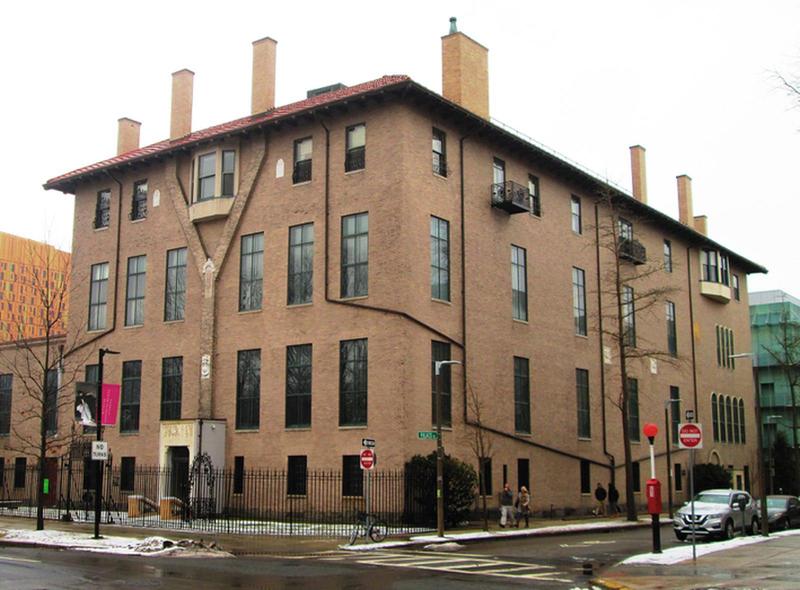
After her husband'south death, Stewart Gardner worked hard to brand their dream come up true. She bought a piece of land in the Fens of England and hired architect Willard T. Sears to draw upward museum models inspired by Venice's Renaissance architecture. While Sears was in charge of constructing the museum, Stewart Gardner dictated the museum's design. When structure of the museum was completed in 1901, Gardner moved into the living quarters on the fourth floor and installed her collection throughout the museum portion of the edifice.
It's that time of the week! Every Th we're open up until 9 pm, so you lot night owls can experience the Gardner Museum nether the stars. Bring a friend and join us tonight for a Gardner getaway! ? pic.twitter.com/jr4xYAS7t5
— Gardner Museum (@gardnermuseum) March 29, 2018
The Museum'southward Artwork Was Deliberately Arranged to Build a Narrative
For a year, Gardner carefully installed each of the items on the first 3 floors of the museum. Every slice was purposely assembled in different rooms to create a story. Gardner wanted to inspire others to fall in love with the fine art, rather than only learn nearly the art's history. Some pieces didn't even provide information nearly the painter or date of origin.
Gardner placed Titian's masterpiece "The Rape of Europa" in the Titian Room. The Titian masterpiece sits in a higher place a small slice of Stewart Gardner'southward pale greenish silk gown designed by Charles Frederick Worth. In the Dutch Room, Gardner organized famous works by European artists such as Peter Paul Rubens, Albrecht Dürer and Hans Holbein.
Isabella thought the painting on the correct (Juana of Austria and a Young Girl) was a Titian and therefore hung it in the Titian room. Although not past him, information technology was painted at the aforementioned fourth dimension that his Europa painting arrived at the Castilian court. Image: https://t.co/T04XmHhax6 pic.twitter.com/SVPvRwsa11
— Gardner Museum (@gardnermuseum) April eighteen, 2018
The Museum'due south Other Items
Not only did the museum feature famous paintings, but information technology likewise presented rare books, manuscripts, furniture, tapestries, sculptures and decorative fine art pieces from the Gardner's travels. Many rooms displayed a mixture of these different pieces from various cultures and periods.
The Early Italian Room highlights Italian Gothic and Renaissance fine art. These paintings are surrounded by article of furniture and other decorative articles from dissimilar periods and cultures across Europe, Egypt, the Middle East and Asia. The Dutch Room includes Italian, Dutch and English pieces such as an Italian nightstand, a Dutch sugar bowl and a Dutch salt cellar.
Looking for a way to ease into the weekend? Stop past the Museum afterward work, nosotros're open tardily on Thursdays! moving-picture show.twitter.com/Tn6DrBdQ3i
— Gardner Museum (@gardnermuseum) January 31, 2019
Artists Spent Fourth dimension at the Museum
The grand opening of the museum was Jan. i, 1903. Guests indulged in champagne and donuts while members of the Boston Symphony Orchestra performed. Scholar Charles Eliot Norton, philosopher William James, and symphony founder Henry Higginson attended the extravagant commemoration. On Feb. 23, 1903, she welcomed the public into the museum.
Stewart Gardner likewise encouraged many artists, performers and scholars to visit the museum, such as John Singer Sargent, Charles Martin Loeffler and Ruth St. Denis. Sargent used the museum's Gothic Room equally a painting studio, while Loeffler posed as his model. Denis danced in the Cloisters, performing her signature piece, The Cobra. Stewart Gardner wanted the artists to discover inspiration from her cute collection and the museum'due south Venetian designs.
Chase away those winter blues at the Gardner — we've planned a night of Caribbean music, dance, and funfair costume-making for tonight's Third Thursdays event: https://t.co/03h8Z7qJk5 pic.twitter.com/R31qYm4uUW
— Gardner Museum (@gardnermuseum) Jan 17, 2019
Standing Her Legacy
Stewart Gardner continued to grow her art collection and personally installed the pieces in the museum for the remainder of her life. She passed away July 17, 1924, later suffering a series of strokes. Although Stewart Gardner was no longer living, she still dictated the museum's future.
According to her will, the museum must remain open "for the education and enjoyment of the public forever." It as well specifies that nix in the museum can exist sold, relocated or removed. The museum was to be maintained the style she left information technology, meaning new pieces weren't allowed either. The collection remained untouched until March eighteen, 1990 — after 13 pieces valued at $500 million were stolen.
#FunFact: The vibrant red walls of the second floor'due south Raphael Room come from not one damask, but rather a patchwork of boldly-patterned fragments sewn together and stretched beyond the walls. During your next visit, meet if you lot tin see the variations! motion-picture show.twitter.com/tUouhw70UJ
— Gardner Museum (@gardnermuseum) December 5, 2018
Suspects Arrived in Fake Police Uniforms
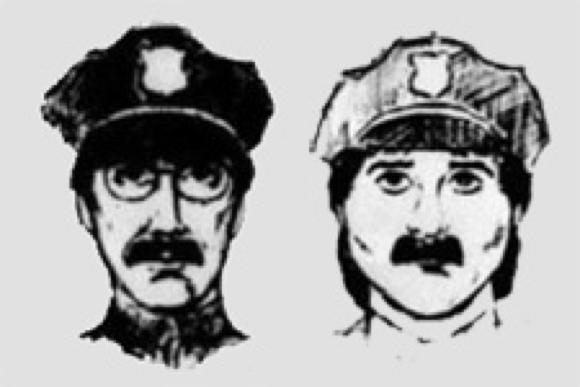
As Bostonians celebrated St. Patrick's Twenty-four hours during the early on hours of March eighteen, 1990, 2 thieves sat inside a red Dodge Daytona on Palace Road near the Isabella Stewart Gardner Museum. The two men were disguised as police officers and i of them had on a fake wax mustache.
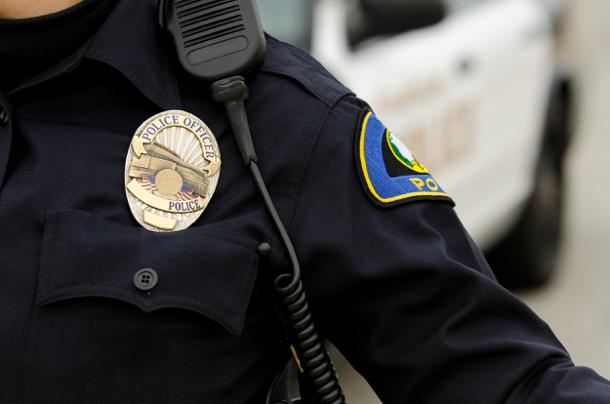
For virtually an hour, the two criminals waited in their machine to avoid the St. Patrick's Day party goers. As the crowd dispersed, the ii thieves began their elaborate program. They exited their vehicle, walked to the entrance of the museum and pressed the buzzer near the door at one:24 a.m.
A Museum Security Guard Allow the Thieves In
The museum had two security guards on duty that night. After the beginning guard, Richard Abath, patrolled the museum, he came back to the front desk to change positions with the other guard. Abath heard the buzzer and saw two men outside. They told Abath they were police force officers who had heard a commotion in the museum'southward courtyard, and asked to enter the building.

Although Abath knew that guards weren't allowed to open the door to uninvited guests, he wasn't sure if the protocol as well practical to constabulary officers. Abath believed the men considering of their uniforms. While the other baby-sit patrolled the galleries, Abath allowed the disguised men to enter.
Handcuffed and Tied
The thieves walked to the front desk, where Abath was stationed. I of the intruders told Abath his face seemed familiar and that there was a warrant for his arrest. Abath, confused, left the front desk expanse, where the only alarm push was located. The thieves immediately forced Abath to face the wall and handcuffed him. Abath thought the arrest was a mistake, simply quickly noticed the intruders didn't search him before putting him in handcuffs. He also realized one of the thieves wore a fake mustache.

A few minutes later, Abath's partner returned to the forepart desk and the thieves handcuffed him, too. The thieves then revealed they came to rob the museum. The robbers took the guards to the basement, where they handcuffed them to pipes and wrapped their heads, hands, and anxiety with duct record. The criminals moved on to the galleries to start their heist.
81 Minutes to Complete the Largest Theft in History
The museum's motion detectors recorded the thieves' movements. First, the robbers entered the Dutch Room and approached Rembrandt'south "Self-Portrait," but the local warning went off. The thieves smashed the alarm. Later on taking the "Self-Portrait" off the wall, the two men unsuccessfully tried to remove the painting from its wooden panel. They left the painting on the floor instead.
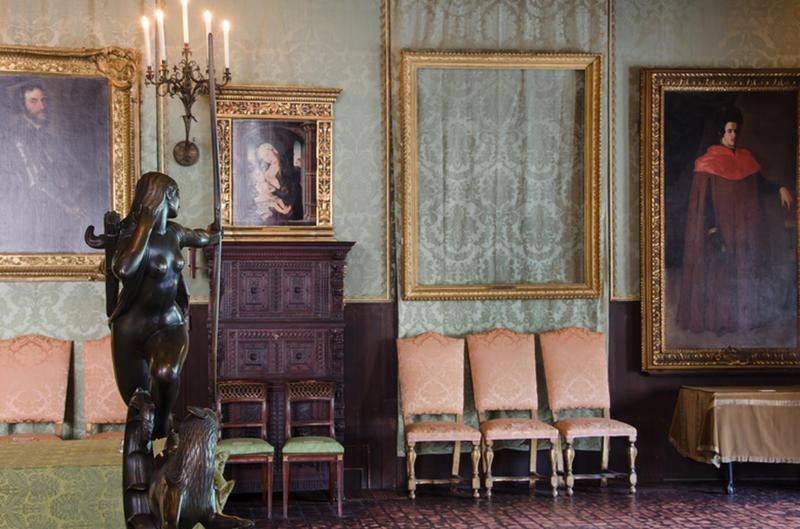
The thieves went on to cut Rembrandt's "Christ in the Storm on the Bounding main of Galilee" and "A Lady and Gentleman in Black" from the frames. Side by side, they took Vermeer's "The Concert" and Govaert Flinck's "Landscape with an Obelisk." The criminals stole a full of 13 pieces throughout the museum including a Chinese Statuary Gu, 5 Degas drawings, and an hawkeye finial. The robbery occurred in 81 minutes. At 8:xv a.m., law arrived at the scene and constitute the guards tied upwardly in the basement.
The FBI Found No Motive or Pattern
Assertive that the stolen pieces would cross country lines, the FBI speedily took over the example. The FBI thought the perpetrators were part of a criminal arrangement from the mid-Atlantic and New England. Throughout the investigation, the FBI held hundreds of interviews including with American drug lords and quondam museum guards.
In addition, the FBI worked with many specialists, including top private investigators, Japanese and French government, museum directors and art dealers. Although the FBI collected over a thou pages of evidence, the investigation uncovered no single motive or pattern. The FBI agent in charge of the Stewart Gardner example, Geoffrey J. Kelly, has mentioned that the FBI knew the identities of the criminals, but Kelly didn't say if the suspects remained dead or alive. Kelly has provided no further comment on the identities.
A Few Theories Most the Art Heist Have Surfaced
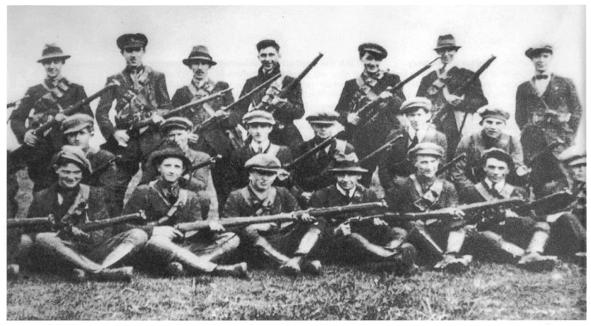
One theory investigated past the FBI was that the heist was planned and carried out by the Irish Republican Army, with the goal of eventually leveraging information to release their members from prison. A different theory suggested Boston's height crime boss, Whitey Bulgar, organized the robbery. The FBI too had a theory that Myles J. Connor Jr. bundled the criminal offence before he became New England'southward peak art thief.
In 2009, the Stewart Gardner Museum'south director of security, Anthony Amore, heard a strange rumor. Amore said, "One bizarre theory was from people who say Mrs. Gardner speaks to them and tells them who stole the paintings. Also, others say mythical figures take spoken to them about the thefts."
One of the Main Suspects Was Boston Gangster Robert Donati
Boston gangster Robert "Bobby" Donati became the FBI's top suspect during the investigation. In 1997, Connor claimed Donati was his accomplice in organizing the Gardner robbery. Connor and Donati visited the museum together a few times before the theft. Too before the robbery, Donati went to a nightclub called The Shack, where he was seen conveying a handbag of police uniforms.
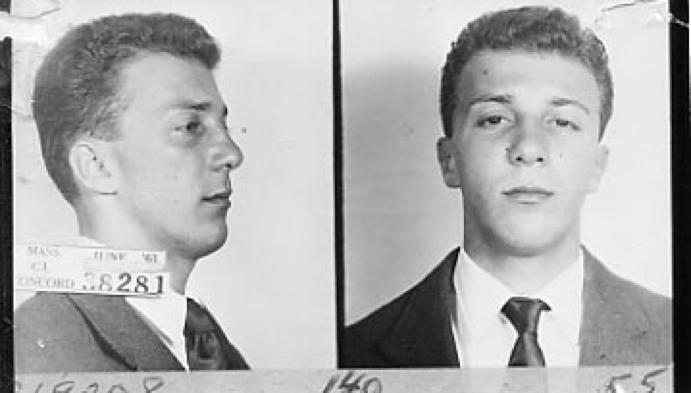
During the 1990 robbery, Connor remained in prison, but he said Donati managed the heist. In 1991, Donati was murdered. According to the New York Daily News, he may have been a victim in a gang war. The FBI somewhen threw out Donati as a lead suspect.
Some other Chief Suspect Was Robert "Bobby the Cook" Gentile
Gangster Robert "Bobby the Cook" Gentile was also on the FBI'south radar as a possible suspect. The FBI believed he held some of the paintings from the Gardner Museum heist. In 2012, the FBI raided his home in Manchester, Connecticut, subsequently the FBI brought drug charges confronting Gentile. The FBI institute aught in the raid except for a list of how much each stolen piece would cost on the black market. However, Gentile said he was innocent and knew nil about the robbery.
Later in 2016, the FBI filed gun charges against Gentile to force him to talk about the location of the stolen fine art pieces. The federal prosecutor, John H. Durham, claimed Gentile and his mob partner Robert Guarente attempted to return two stolen artworks to reduce a prison sentence for one of Guarente's associates. Too, Guarente's wife insisted Gentile possessed a few of the stolen paintings. Gentile'southward lawyer argued against these claims and said that Gentile didn't know anything virtually the heist. In 2018, Gentile was sentenced to 54 months in prison on gun charges, but all the same hasn't admitted to any noesis about the whereabouts of the paintings.
Robert Gentile, the Hartford gangster who may hold the clue to solving the world'south richest fine art heist, is scheduled to be released from prison Sunday https://t.co/e8DpgiQWS1 picture show.twitter.com/4lhci3nCdZ
— Hartford Courant (@hartfordcourant) March 11, 2019
A Few Leads Included a Letter and a New Video
In 1994, museum managing director Anne Hawley received a letter of the alphabet that assured the return of the stolen pieces for $2.six meg. The letter writer demanded that the museum get The Boston Globe to print a coded bulletin in the business section. Although the newspaper published the message, the mysterious writer disappeared after learning police force enforcement were involved.

On Aug. 6, 2015, the U.Due south. Attorney's Office released a video that was taped the night before the heist at the Gardner Museum. On the half-dozen-minute video, two men appear at the archway of the museum. One man was identified as Abath, the security guard who was tied upwards during the robbery. The other human being remains unknown. Government take asked for the public'south help to identify him in the footage. The video shows Abath buzzing the unidentified man into the museum twice. The man stayed in the lobby for a couple of minutes, exited and left in a car.
DNA Nerveless at The Crime Scene Went Missing
After the robbery in 1990, police nerveless traces of Deoxyribonucleic acid from the duct tape and handcuffs that the thieves used to concur the museum's security guards. In 2010, the FBI wanted to retest the evidence due to recent improvements in DNA analysis, hoping the new examination would help find the thieves. All the same, the evidence containing the DNA had disappeared.

The FBI conducted a search for the law-breaking scene prove, merely it was nowhere to be found. Investigators don't know when the show went missing, but anonymous sources claimed the evidence had been gone for over a decade. The FBI likewise doesn't know if the items were misplaced, stolen or disposed of. The missing bear witness became some other setback for the Stewart Gardner case, which remains unsolved to this twenty-four hours.
A True-Crime Podcast Investigated the Unsolved Art Heist Mystery
In 2018, WBUR, a public radio station, collaborated with The Boston Globe to produce a x-function podcast covering the fine art heist mystery. The podcast, "Last Seen," covers the robbery, the suspects, people continued to the case and the FBI's investigation.
The squad, led by WBUR members Kelly Horan and Jack Rodolico, researched the mystery for a year. The podcast features many interviews, including one with security guard Abath and his partner from the night of the offense. The museum's manager of security, Amore, says, "Things like this podcast that can accomplish a large audience are important for keeping the story live in people's minds and reminding the public that we're never going to end looking for the stolen art."
Where are the Rembrandts? Heed to Final Seen on @stitcher today: https://t.co/5rTJ2QVtXt movie.twitter.com/94IoyyB3DT
— Last Seen Podcast (@LastSeenPodcast) September 18, 2018
A Documentary and Volume Covering the Law-breaking Was Released
In 2005, a documentary picture called "Stolen" by Rebecca Dreyfus featured the famous heist. The documentary follows art detective, Harold Smith, as he looks into the robbery's investigation and the 13 seized pieces. Smith chats with contemporary authors about Stewart Gardner's reputation equally a famous art connoisseur and the works of Dutch painter Vermeer.
The Isabella Stewart Gardner Museum printed a pictorial volume as well named "Stolen" in 2018. "Stolen" provides information about the thirteen stolen works of art and contains essays from key staff members including Affection and Nielsen. Museum guests frequently inquire for more details on the missing pieces, which inspired the museum to produce "Stolen."
The Famous Heist Is Mentioned Throughout Pop Civilisation
Many TV shows have featured the crime, including "The Black List," "The Simpsons" and "Boozer History." In "The Black List," the episode "The Courier" features a criminal named Raymond Reddington looking at Rembrandt'due south painting "Christ in The Storm on the Ocean of Galilee."
"The Simpsons" has an episode in which Mr. Burns possesses stolen art from the Stewart Gardner Museum at Burns Manor. As a issue, the police force arrest Mr. Burns and throw him in prison house. In "Drunk History," the episode "Boston" features two criminals struggling to steal art and doing whatever they can to complete the heist.
New Simpsons tonight with @realGDT.Who's YOUR favorite guest star? #TheSimpsons motion-picture show.twitter.com/lT7H9fjYjl
— The Simpsons (@TheSimpsons) March 3, 2019
Some of the Stolen Paintings
Govaert Flinck's "Landscape with an Obelisk" from 1638 is one of the stolen works of art. The robbers took Flinck's painting from the museum'southward Dutch Room. Many art enthusiasts initially believed the film belonged to the painter Rembrandt, simply they later learned Flinck was the owner. Dutch painter Flinck was actually a student of Rembrandt, who helped influence his work.
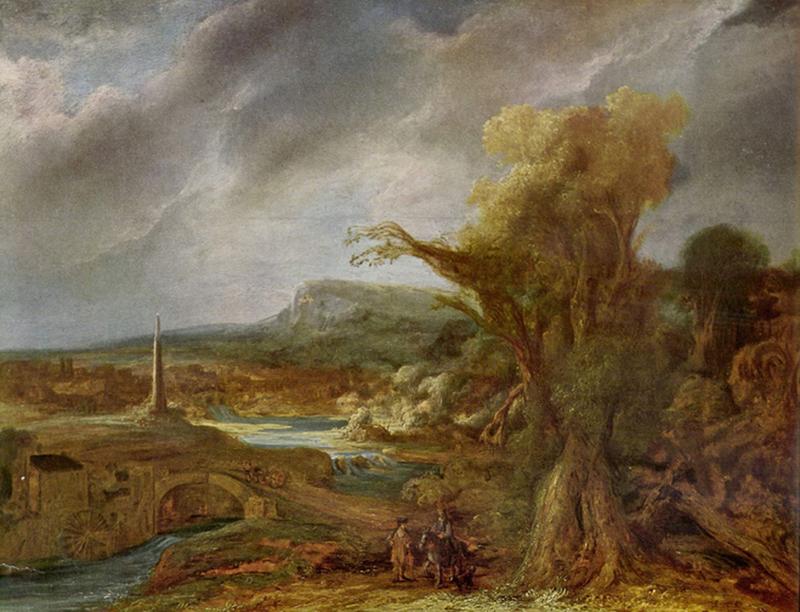
Flinck created "Landscape with an Obelisk" using oil on wood. The cute painting features a stormy solar day, a fantasy mural and an obelisk inspired by 1 that'southward near Amsterdam. The picture as well includes a bridge and a small human on a equus caballus.
The Painting "Chez Tortoni" Was Another Missing Piece
Another missing painting is Édouard Manet's "Chez Tortoni" from effectually 1875. The museum's Blueish Room used to hold Manet's famous artwork. Manet was known to create paintings in cafes that resembled snapshots.
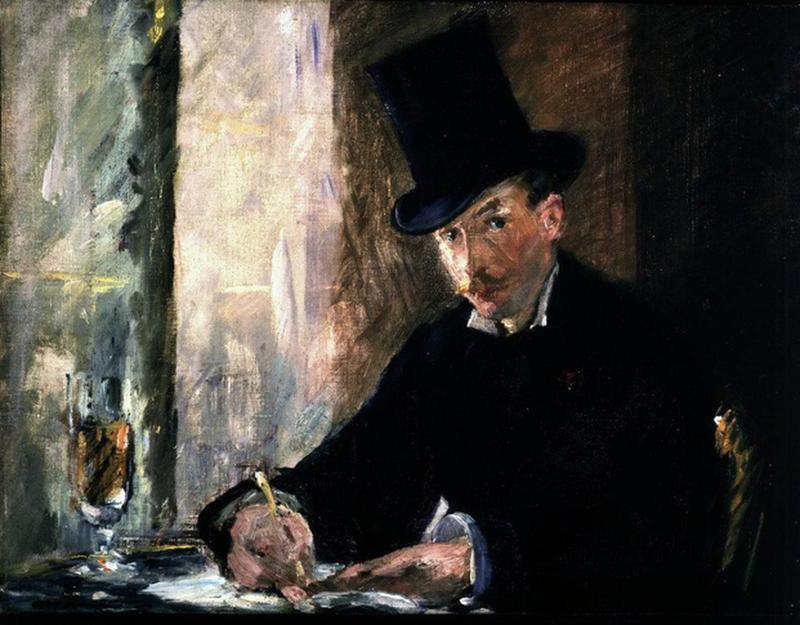
Manet'due south painting illustrates a fellow with a mustache and a top hat sitting in the Café Tortoni de Paris. The homo is holding a pencil in his manus and writing on paper. The human's eyes are positioned looking direct at the piece'due south viewer. Additionally, a glass of wine sits on the gentleman'southward table. WBUR describes the motion picture's brush strokes as broad and tactile.
"La Sortie de Pesage" and "Three Mounted Jockeys" by Degas Were Stolen
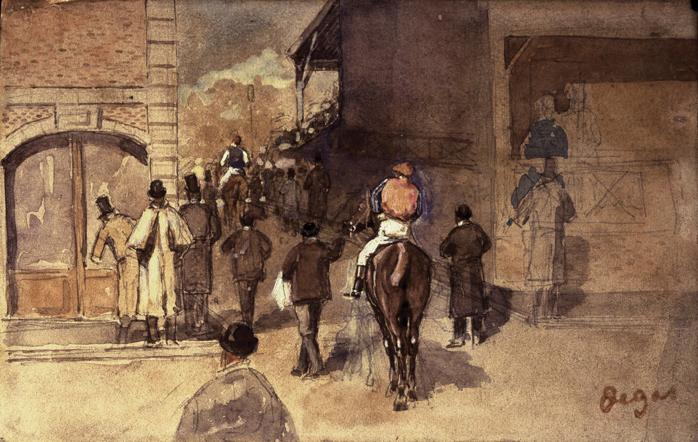
Several Edgar Degas works disappeared in the heist, including "La Sortie de Pesage" and "Three Mounted Jockeys." These ii paintings used to hang in the museum'due south Short Gallery. Degas, a French artist, was popular for drawing dancers, only in "La Sortie de Pesage" he illustrated a oversupply of people, a jockey and a horse using pencil and watercolor. No 1 knows when Degas created "La Sortie de Pesage."
The thieves also stole the Degas painting "Iii Mounted Jockeys" from around 1885. Degas created the slice with black ink and oil pigments. While one jockey sits upright on a equus caballus, the other two jockeys are upside down in the painting.
"Program for an Artistic Soirée" One and Two Were Taken
A couple more Degas works that vanished include "Plan for an Artistic Soirée" and "Program for an Artistic Soirée, Study 2" from 1884. The criminals removed these Degas drawings from the Short Gallery's cabinets. Stewart Gardner had assembled the cabinets herself to showcase the artwork.
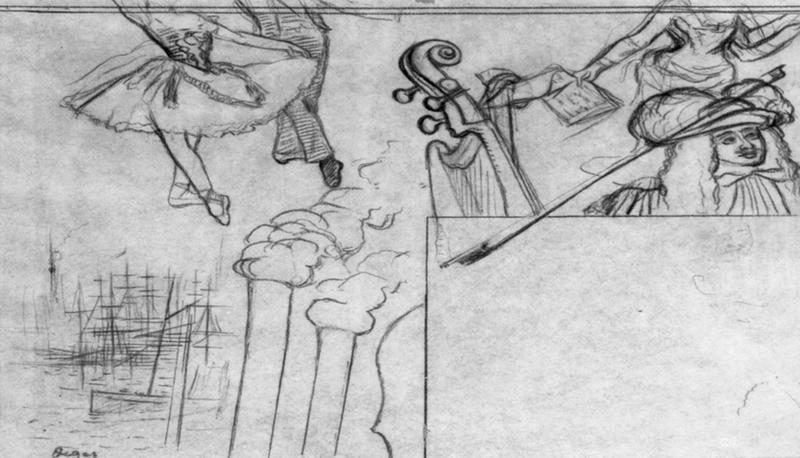
Degas sketched the drawings with charcoal on white paper, which features the skirt and legs of a dancer. The drawing also includes a woman holding an open booklet and a human being in a lid and wig next to a musical instrument. The second "Plan for an Artistic Soiree" appears more finished than the first sketch.
"Cortège aux Environment de Florence" and a Few Works By Rembrandt
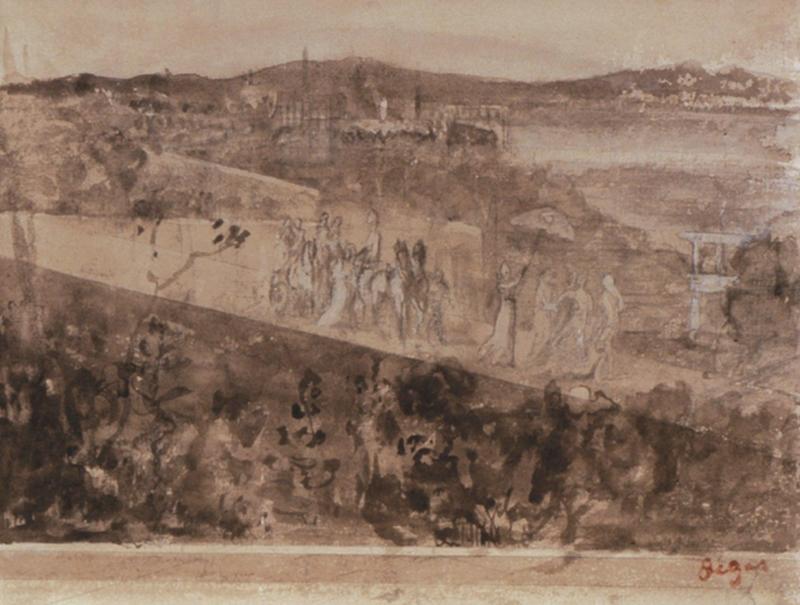
Nonetheless some other Degas, the sketch "Cortege aux Environs de Florence" and a few Rembrandt works were also stolen. "Cortege aux Environs de Florence" used to be displayed in the Short Gallery. Degas drew the artwork with a pencil and used a sepia wash on paper. The sketch illustrates a carriage with horses, a woman with a giant umbrella and 3 women who may be dancing. He finished this sketch around 1857.
Other missing works include Rembrandt'south "A Lady And Gentleman In Black" and his most famous painting "Christ In The Storm On The Sea Of Galilee" from 1633. The criminals stole both paintings from the museum's Dutch Room. The thieves also made off with his tiny sketch titled "Portrait Of The Artist As A Young Man" from 1633. The sketch features Rembrandt'due south serious face up with untidy hair. The thieves attempted to seize Rembrandt'south "Self-Portrait" oil painting, only the job was unsuccessful.
The Thieves Also Took a Gu, a Finial and Vermeer'southward "The Concert"
From the museum's Dutch Room, the criminals made off with a Chinese Gu (a bronze beaker) from 12th century BC. According to WBUR, the Gu was one of the most elegant and oldest pieces in the museum. Another item removed from the museum was the bronze French Hawkeye finial from around 1813. The hawkeye was fastened to a flagpole from Napoleon's First Regiment of Imperial Baby-sit. Although the eagle is gone, the flag remains in the museum.
WBUR reports that Vermeer'southward "The Concert" is the rarest and nigh valuable of the stolen works because few of his paintings exist. Vermeer'due south painting is priced at $200 1000000. "The Concert" features three musicians surrounding a pianoforte and a black-and-white tiled flooring.
Fearful until the final moments of #LastSeen that I was hearing the deeply eerie soundtrack for the last time…until the words "more episodes" were uttered. Safe to say, though, that @kellyahoran is not a fan of the missing Statuary Hawkeye Finial. https://t.co/0OQxQIDaAG #podcast pic.twitter.com/r4a7EaXSuf
— Jann Alexander (@AustinDetails) November 19, 2018
The Museum and FBI Are Still Looking for New Leads
Although the Gardner case nerveless some promising leads, the identities of the criminals and the whereabouts of the 13 pieces remain a mystery. To this day, empty frames of the missing paintings hang on the walls. The Isabella Stewart Gardner Museum hopes that the stolen pieces volition one twenty-four hours be returned. Currently, the museum is offering a $ten meg reward for data that can help recover the stolen pieces.

The FBI, the museum and the U.South. attorney's office continue to search for new leads. The museum encourages anyone with information to attain out to the Stewart Gardner Museum. The museum's director says "I've spent more than a decade preparing for any scenario. I'm very ready. I'll go anywhere. I'll meet with the devil for these paintings."
pottersuicklentrot.blogspot.com
Source: https://www.ask.com/culture/isabella-stewart-gardner-museum-art-heist-mystery?utm_content=params%3Ao%3D740004%26ad%3DdirN%26qo%3DserpIndex
0 Response to "Is the Boston Museum of Fine Arts in the Back Bay Section of Boston?"
Enregistrer un commentaire